SILAO BLOCK
Silao :-
In between Nalanda and Rajgir on NH 82 about 15 km to Biharsharif, there is a large village namely Silao where very a popular native sweetmeat “KHAJA” is prepared. The town is said to have been founded by Maharaja Vikramaditya.
Goraya Sthan (Silao) :-
Western side of the town there is a place called Goraiya Sthan, over one acre in area. A number of old Buddhistic figures are collected here, the most prominent being a big piece of three line marked stone, breast high above the ground, stands over a tilha which is three fit high from the ground which faces west. All the Gorayas face east but this one faces west. The legend is that this figure was laid embedded in a pond near the thakurbari. People tried their best to remove this stone from that place but failed. It is said that then the figure cried out that it would be removed only by Kurmis and Malis and by no other. After that it was removed to its present side by certain Kurmis and a Mali. Now a day it is worshipped by all castes.
Silao Garh :-
It is the palace and fort of the raja of Silao. The pillars, stone slabs, and other materials of the garh were removed by the Mussalmans and used in building their Mosque.
The KP Jayaswal Research Institute, during in the course of its Archaeological Explorations brought to light the site period Early medieval
Mosque(Silao) :-
South west of the railway station.Material used obtained from the Garh.
Hanuman Sthan (Silao) :-
Towards the north west side of the town is a place called Hanuman Sthan, where a large number of old broken images and statues are collected underneath a pipal tree.
Ood Khanda(Ood Kuan):-
About 1 km to the north- west of the northern end of the town, there is an old well called Ood kuan in the khanda named Ood Khanda.
Toms (Silao) :-
There are two tombs and a musjid with numerous inscriptions in Persian and Arabic characters. It is built of stone and mortar and is of the ordinary kind. The pavement is indeed a mass of embedded pillars.
Nalanda :-
A village called the ‘Bada Gaon’, in the vicinity of which, are the world famous ruins of Nalanda University. It is Located 95 km from Patna .The ruins as seen today is surrounded by villages that too have an ancient history and most possibly been built on the ruins of the ancient University. These villages are known as Baragaon, Begampur, Jagdishpur, Muzaffarpur and Kapatya which cover a square kilometer and a half around in area. Nalanda is known as the ancient seat of learning. 2,000 Teachers and 10,000 Students from all over the Buddhist world lived and studied at Nalanda. It is the first Residential International University of the World. Nalanda University, built in the 5th century BC. Patronised by royalty and eminent religious leaders like Buddha and Mahavira, it enjoyed an excellent reputation world over.
Nalanda University Ruins Archaeological Complex :-
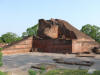
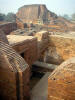
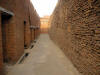
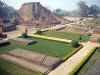 Total excavated area of the complex is about 14 hectares. The university was built in Kushan style of architecture. There are huge gardens, bronze statues and red-brick edifices all around. The buildings are divided by a central walkway that goes south to north.The monasteries or “Viharas” are east of this central alley and the temple or “Chaiyas” to the west.This place saw the rise and fall of many empires and emperors who contributed in the development of Nalanda University.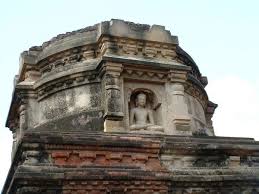
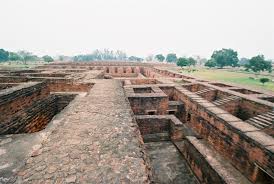
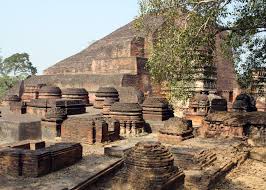 Many monasteries and temples were built by them. King Harshavardhana gifted a 25m high copper statue of Buddha and Kumar Gupta endowed a college of fine arts ere. Nagarjuna (a Mahayana philosopher), Dinnage (founder of the school of Logic) and Dharmapala (the Brahmin scholar) taught here. Nagarjuna later became the high-priest there.The famous Chinese traveller and scholar,Hiuen-Tsang stayed here and has given a detailed description of the situations prevailing at that time. By excavation of the place has revealed many stupas, monasteries, hostels,stair cases,meditation halls, lecture halls and many other structures which speak of the splendour and grandeur this place enjoyed,when the place was a centre of serious study. A large number of ancient Buddhist establishments, stupas, chaityas, temples and monastic sites have been excavated and they show that this was one of the most important Buddhist centres of worship and culture
 .Regarding the historicity of Nalanda, we read in Jaina texts that Mahavira Vardhamana spent as many as fourteen rainy seasons in Nalanda.Pali Buddhist Literature , too, has ample references to Nalanda, which used to be visited by Lord Buddha. During the days of Mahavira and Buddha,Nalanda was apparently a very prosperous temple city, a great place of pilgrimage and the site of a celebrated university. It is said that King Asoka gave offerings to the Chaitya of Sariputra at Nalanda and erected a temple there.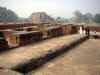
 Nalanda was put to a brutal and decisive end by Bakhtiyar Khilji, a Turkish invader (c. 1200), who is said to have looted and burned the monastery and killed its senior monks. Local legend has it that the three libraries of Nalanda were so large that they burned for six months.
Sarari Mound :-
ASI carried out an excavation at the site in 1973-74,75-76,76-77 and 79-80 and remains brought to light some beautiful sculptures, such as Uma-Mahesha, Tara, Bodhisattva, Marichi and plastered brick wall 22m in length provided with niches. The bottom of the niches were found to be decorated with pallava and kalasa designs.To the east of the brick wall, two stair case, one on each side of the sub-shrine were unearthed. A fourteen line prasasti engraved on a black stone and fixed by the side of a niche was exposed. The inscribed slab found in the excavation, records probably the installation of an image of Buddha by Prathama Shiva also called Purnawarman, the names of whose ancestors are also given. The prasati composed by Sandhi-Vigrahika Durgadutt and engraved by Madhava, the sone of Vamano was written in sanskrit language and Nagari characters of about the seventh-eight century. The excavation revealed a rectangular temple, with its entrance flanked by two projecting arm having moulded decorations, pilasters and niches for having images of deities and figures.
Sun Temple (Bargaon) :-
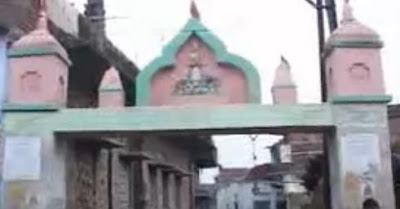 It is the site of great religious. The temple at the heart of village is very old and consists the black stone idols of sun god of 7 th century. At the Northwest end of the village is famous Suraj Pokhar which accommodates more than thousand pilgrims who come to present offerings to sun God on Chath festival twice a year, in the month of Kartika and Chait.The temple at the heart of the village was at the north-western side of the Suraj Pokhar and was shifted inside the village in late 17th century to protect it from mughal invasion. The sun temple of Bargaon is associated with Jarasandha, Lord Krishna and his great-grandson Sambha. According to the mythology Jarasandha was killed in a duel with Bhima a suryavanshi. The duel between the two continued for 14 days before Jarasandha was tore apart in two halves. A tradition “Ankuut” to celebrate the victory of good over the bad is continued till date.
The Suraj Pokhar has medicinal value and till recently people from different corner of Bengal and Bihar came to take dip in the pond and benefit. Till 1950’s this was also popular destination for Pind-daan a part of Shradh ritual. People after performing Pind –Daan at Gaya also performed the ritual here at Suraj Pokhar offering Pind to Lord Yama, Son of Sun god. During exploration done by ASI in year 1973-74 a large number of Pala Sculptures including images of Marichi, Buddha, Surya,Vishnu, Tara, Hara_Gauri, Chaturmukha Siva-linga and Ganesh in different sizes were discovered
The KP Jayaswal Research Institute, during in the course of its Archaeological Explorations brought to light the site period NBPW phase
Nalanda Multimedia Museum :-
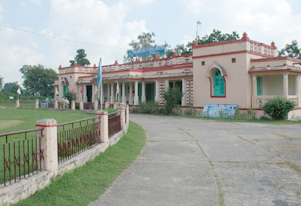 Great place to visualize the History of Nalanda. India’s first Multimedia Museum was opened on 26 January 2008, which recreates the history of Nalanda using a 3D animation film narrated by Shekhar Suman. Besides this there are four more sections in the Multimedia Museum: Geographical Perspective, Historical Perspective, Hall of Nalanda and Revival of Nalanda.
Stupa Site III :-
Temple is an ancient shrine situated in Nalanda, Bihar. The temple is a rectangular structure with its lofty sanctum is approached by flight of steps with parapet walls decorated with figures of lions. It has four, stupa-like corner towers, which are beautifully decorated with niches containing Buddhist stucco images.
Nav Nalanda Maha Vihar-
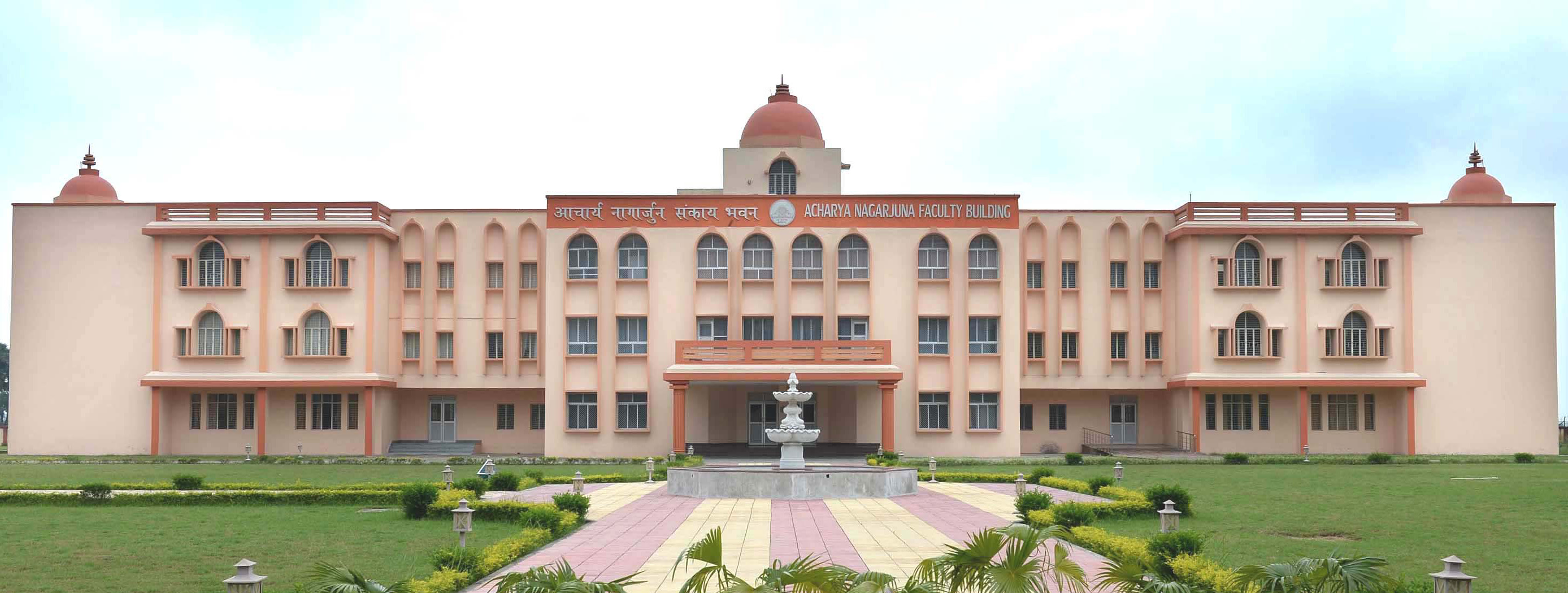 It was established in 1951. The Bihar government has set up this institute that teaches Pali near the ancient university. In the institute Indian as well as foreign students study and do research
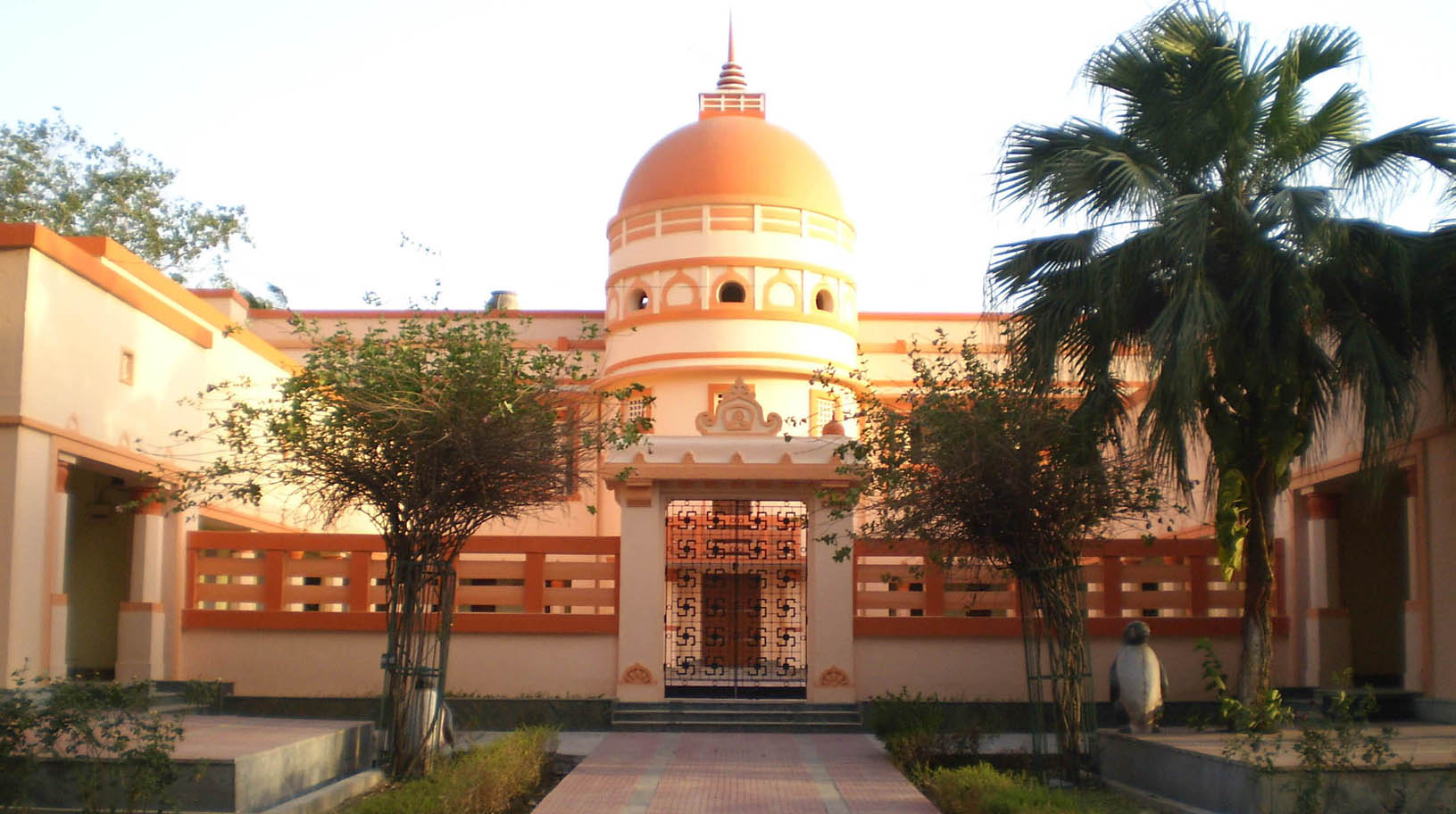
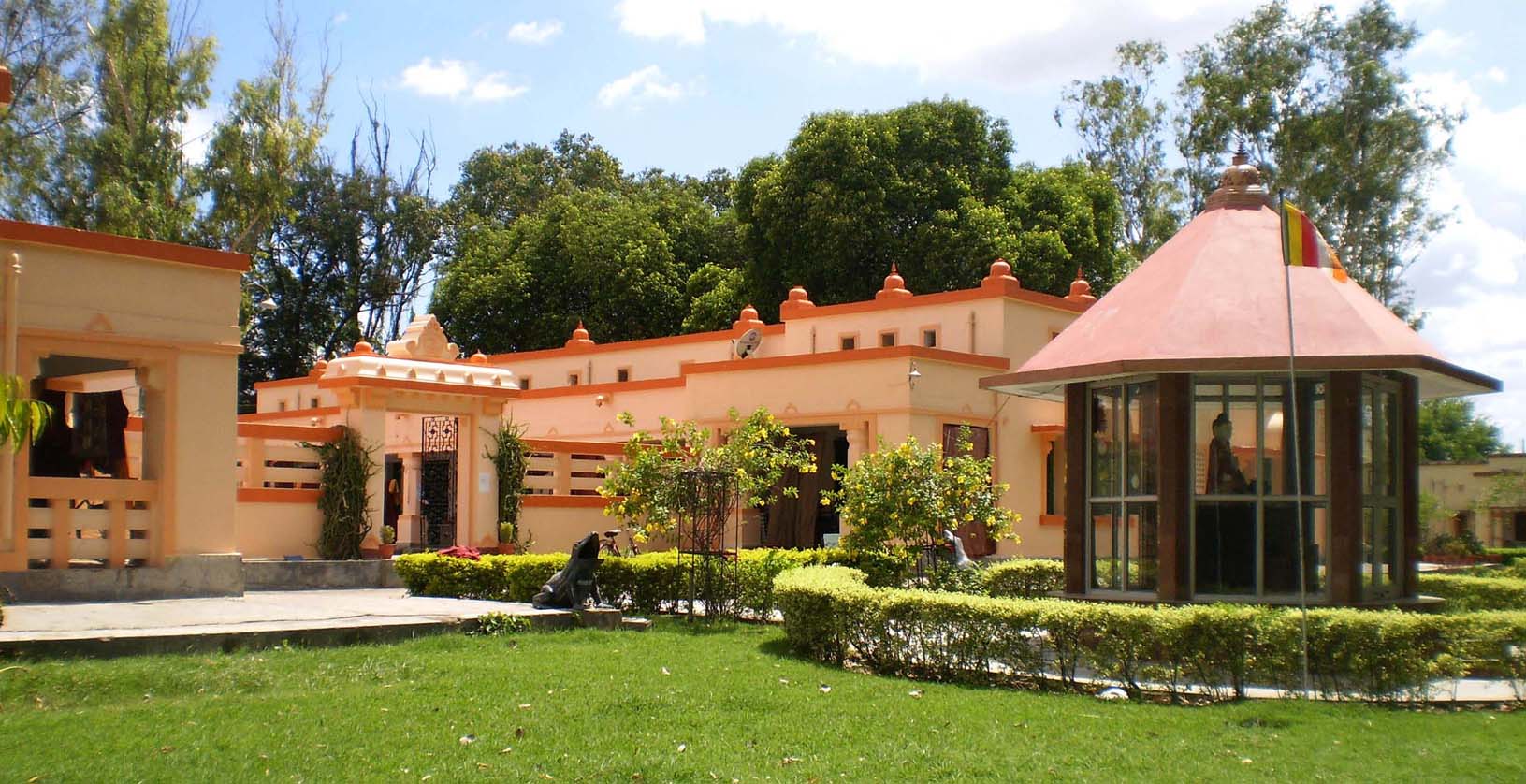
work on Buddhism and Pali, which was a widely used language in the ancient times.
Archeological Museum, Nalanda :-
It was established in 1917,opposite the entrance to the ruins of the university .It houses the antiquities mainly those excavated from Nalanda, the earliest university cum monastery complex and from Rajgir. It has a small but beautiful collection of Buddhist and Hindu stone sculptures and bronze image of Gods and Goddesses and a number of  undamaged statues of the Lord Buddha that were found in the area. Two enormous terra-cotta jars of the first century stand intact behind the museum in a shaded enclosure. The collection includes copper plates and stone inscriptions, coins, pottery and samples of burnt rice (12th century AD) found among the ruins here. The key gallery displays sculptures of Trailokya Vijaya Vajrayana deity), Bodhisattva Avalokiteshvara, Maitreya, Buddha in Varada, Dharmachakra and Bhumisparsha posture, Samantabhadra, Parshvanath and Nagaraj . A scale model of excavated remains of Nalanda University occupies the central place of the hall.
The first gallery exhibits the images and sculptures of Khasarpana, Heruka, Mariachi,Vageshwari, Vaishali-miracle, Buddha in varada mudra, miracle of Sravasti, Surya, Lakshmi, Ganesh, Shiva-Parvati, Kuber and Rishabhnath.The second gallery contains one hundred and forty seven miscellaneous objects including terracotta, stuccos, iron implements and inscriptions. The central showcase exhibits a multi spouted pot related to serpent worship found from Rajgir.
In the third gallery altogether ninety-three specimens of bronzes have been displayed. Two images of Buddha in boon giving posture, Tara, Prajnaparamita, Loknath, Bodhisattva padmapani, Buddha in earth touching posture, depiction of a Buddhist temple, etc. are some important images related to Buddhist faith whereas images of Ganesh, Surya, Kamadeva, Indrani and Vishnu, etc. are examples of Brahmanical religion.
Stone sculptures and images of Kinnaras worshipping kalpadrum (2 panels), Vishnu, crowned Buddha in preaching pose with important events of his life, Buddha in Bhumisparsha-mudra with eight events, Mariachi, Vajrapani and Padmapani Bodhisattvas are kept in the fourth gallery.
Open during 10.00 to 17.00. Closed on Friday.
Hsuen Tseng Statue (Hsuen Tseng Memorial)
Xuanzang memorial :-
In the memory of Xuanzang, a Chinese traveler who came to India in around 5th century AD, A Memorial Hall is built in the year 1960-61. Xuanzang was attracted by the glory of Nalanda University and stayed there for 12 years both as a student and as a teacher.  He gave detailed and many description of the Indian political and social conditions of that time. On January 12, 1957, Pandit Jawahar Lal Nehru, Hon’ble Prime Minister of India, on behalf of the Government of India, received the relics of Ven.
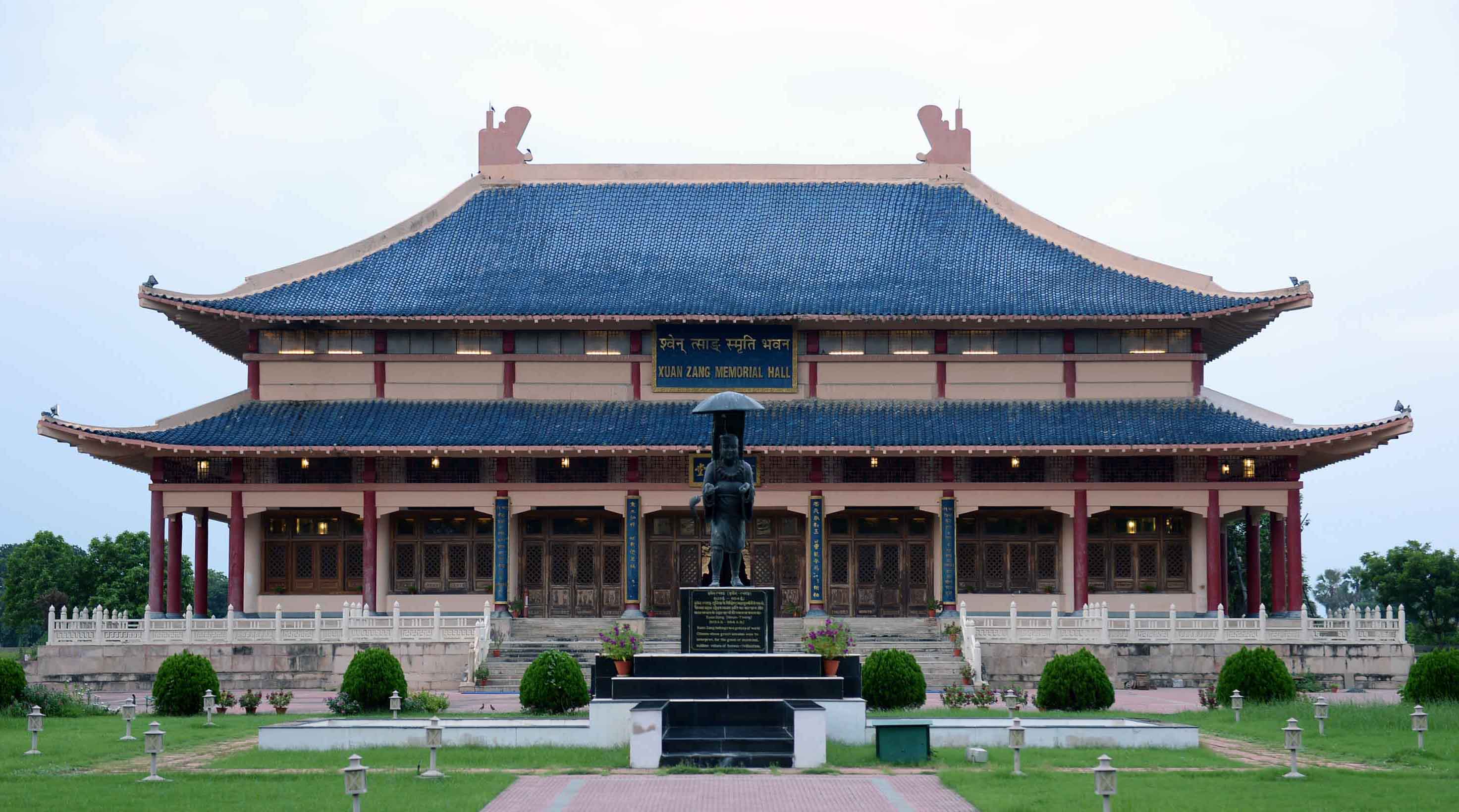 Xuanzang from His Holiness the Dalai Lama in a function at the Mahavihara, along with a cheque for the construction of a Xuanzang memorial at Nalanda. The relics, which will be enshrined in this hall, are currently kept in the Patna Museum, in Patna. The dream of Pt. Jawaharlal Nehru to develop Xuanzang Memorial Hall as a symbol of Indo-Chinese friendship has materialized. On 12th February, 2007 the Xuanzang Memorial Hall was inaugurated with the grand success and opened for public. At the occasion several dignitaries of the both countries, India and China attended the function. The Memorial hall constructed in the year 1960-61 was spread in 108 ft by 54 ft before being renovated and expanded . A Chinese delegation stayed here for about 26 days and embellished the hall with their art and culture. The shining metallic work designed by the Chinese, the wall paintings, photographs and other decorative pieces–all done by them are eye catching.The walls of the hall depict the work and contributions of Xuan
 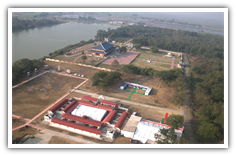 Zang.The hall, now on a sprawling 400 sq feet area, is a cynosure for thousands of foreign and Indian tourists, who feast on the architectural grandeur of the structure and the soothe their eyes on the manicured vale stretching over 65 acres, surrounding it.Pond–rich in aquatic flora and fauna on one side of the hall is a major attraction with boats and house boats for yachting.
Mazar of Sufi Ahmad Sajjad, Panhessa :-
Panhessa is a village on Biharsharif – Rajgir road. This village was abode of Maulana Abul Mohasin Mohammad Sajjad who was a great religious scholar of Islamic pantheon. He was the founder of the Emarat-e-Sharia, Phulwarisharif that has the highest order among the Muslim’s institution. Ahmad Sajjad was elder brother of the Maulana. He also was a great Sufi saint of his times. He was a very popular saint and the people had deep regards for him. Stories of the saint’s miracles are still prevalent among natives of the village. His Mazar is located near a mosque in the village where Urs of the great Sufi Saint is celebrated every year on the 27th day of Muharram. Considerably large numbers of Muslims, as well as, Hindu devotees participate in the Urs.
Kundalpur :-
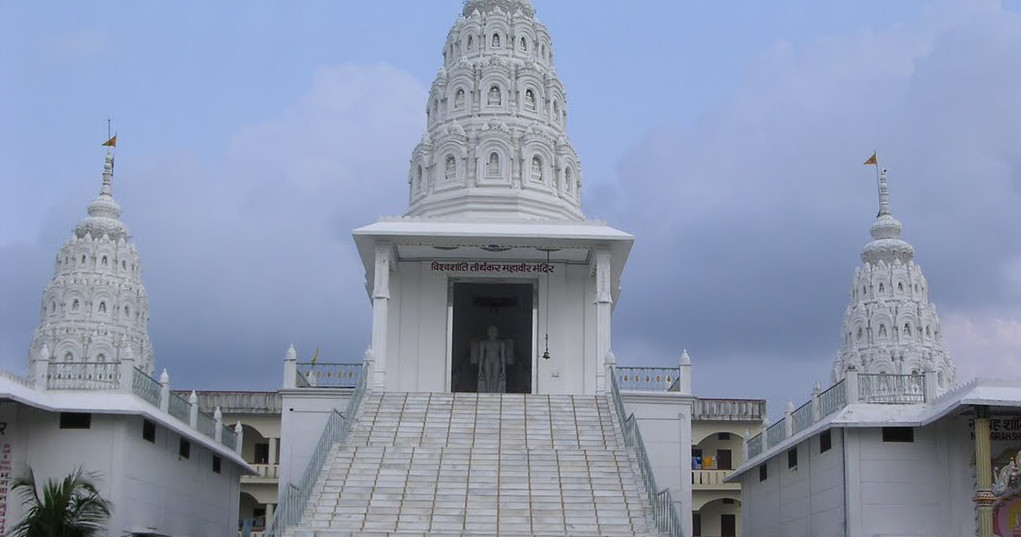
Kundalpur is located at the distance of 1.6 kilometers from the remnants of the Nalanda University,15 km from Rajgir, 15 km from Bihar Sharif , 75 km from Gaya and 100 km from Patna.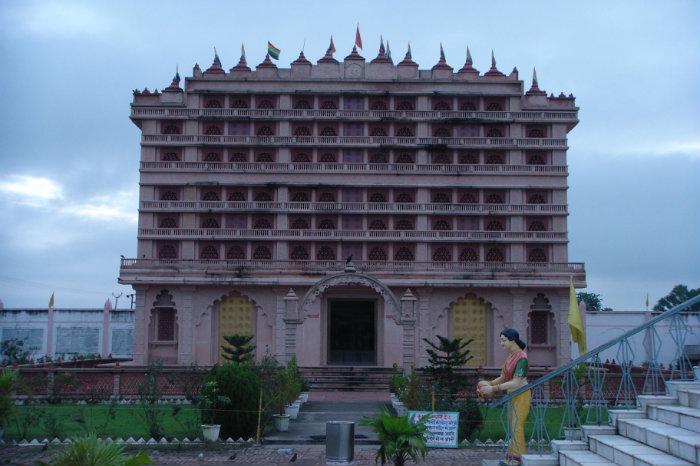 The place is an important destination for Jains, particularly for the Digambar sect of the Jains. Digambar Jain followers believe that the 24th and the last Tirthankar, Lord Mahavira was born here. Being linked to Mahavir’s, people built many temples at the place which are major tourist attractions here.A new beautiful Jaisalmer stone temple which houses statues of Lord Mahavira, Adinath Swami and Gautam Gandharva and Nandyavrat Mahal was built .There is also an ancient Jain temple , which is centuries old.A magnificent temple of Bhagwan mahavira with beautiful spires. In the temple a white coloured 4½ feet high Bhagwan Mahaveer Padmasana idol is installed. There is an ancient umbrella, outside the temple where foot images of Bhagwan are installed.
Keerti Stambha :-
A big magnificent temple Keerti Stambha located near the main temple houses 8 idols of Bhagwan Mahaveer. In this temple a beautiful picturization of 16 dreams seen by Mother Trishala, the mother of Bhagwan Mahavira and foot images of her installed. In an umbrella, foot images of Gautam Ganadhara – the chief Ganadhara of Bhagwan Mahaveer are also installed. Foot images of Acharya Bhatta Akalanka Dev are also installed here. There is an art gallery of pictures and photos related to Bhagwan.
Viswa Shanti tirthankar Mahavir Mandir :-
Rukmini Asthan(Jagdishpur) :-
More than a Kilometer and a half south west of the excavated site is the village of Jagdishpur. Here in a Hindu temple on a mound or Stupa. In it is an image of a large size Buddha worshipped as Rukmini, the daughter of king Bhimika of Vidarbha . It is a figure of the ascetic Buddha, seated under the Bodhi tree, surrounded by horrible demons and alluring damsels seeking to seduce him away from his deep meditation. On each side other scenes from his life are represented, including the one of his death or Mahaparinirvana seen at the top of the slab.(Statue of Buddha Life scenes of buddha , black stone 10 th century (131).
The KP Jayaswal Research Institute, during in the course of its Archaeological Explorations brought to light the site period NBPW phase
Panchawora :-
During exploration done by ASI in year 1973-74 a number of images including a crowned Buddha in Bhumisparsa- mudra, a panel depicting the scenes from the life of Buddha and triple – faced Marichi, Buddha, Tara a nd Jambhola were found.
Tajubigha :-
During exploration done by ASI in year 1973-74 an image of crowned Buddha was found.found.
Mohanpur :-
During exploration done by ASI in year 1973-74 an image of Buddha with an inscription ascribable to about the ninth-tenth century A.D was found.
Chandiman
The KP Jayaswal Research Institute, during in the course of its Archaeological Explorations brought to light the site period Early medieval
Tazu Bigha
The KP Jayaswal Research Institute, during in the course of its Archaeological Explorations brought to light the site period Early medieval
Sun temple (Surajpur) :-
Surajpur is situated near the University of Nalanda. Named after the Sun himself has a lake with its temple of Surya, the Sun God , is a pilgrim destination twice a year in “Vaishakha” (April-May) and in “Kartika” (October-November) during the Chhath Puja or Sun worship.This temple has a number of statues of Hindu and Buddhist deities. A five feet high statue of Parvati is of particular interest. Special pujas to God Surya has been performed by the people of villages every Sunday. During exploration done by ASI in year 1973-74 a large number of Pala Sculptures including images of Avalokitesvara Vishnu, Tara, Hara-Gauri and Buddha in bhumisparsa-mudra were found.
The KP Jayaswal Research Institute, during in the course of its Archaeological Explorations brought to light the site period Early medieval
Nanand :-
Dastur
The KP Jayaswal Research Institute, during in the course of its Archaeological Explorations brought to light the site period Early medieval
Daman Khanda (Pranganpar,Lat. 250 25’ N ; Long. 810 54’ E ):-
The village Damankhanda situated at 1km. north from the ruins of the ancient Nalanda Mahavihar.
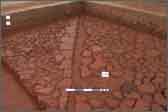 ASI carried out an excavation at the site in 2007-08. The objective of this excavation was to mark out the extension of ancient Nalanda Mahavihar. The remains of Buddhist temple, fragmentary architectural and sculptural remains revealed.
Antiquities recovered during the small scale excavation mostly are terracotta human figurine, animal figurine, wheel, ear-lobe, stopper, sling ball, dabber, beads and inscribed sealings. Small sculptures of Buddha in Bhumisparsa and Dharmachakra pravartan pose and Vishnu in Samabhanga pose made of stone were also found. Nail and nail parer are among the iron objects. Bone point and fragments of votive stupas made of stone were also the noteworthy findings.
The KP Jayaswal Research Institute, during in the course of its Archaeological Explorations brought to light the site period Early medieval
Ghustawan
The KP Jayaswal Research Institute, during in the course of its Archaeological Explorations brought to light the site period Early medieval
Sabait
The KP Jayaswal Research Institute, during in the course of its Archaeological Explorations brought to light the site period Early medieval
Bara
The KP Jayaswal Research Institute, during in the course of its Archaeological Explorations brought to light the site period NBPW phase
Kapatiya
The KP Jayaswal Research Institute, during in the course of its Archaeological Explorations brought to light the site period Early medieval
Mitawan
The KP Jayaswal Research Institute, during in the course of its Archaeological Explorations brought to light the site period Early medieval
Nanana
The KP Jayaswal Research Institute, during in the course of its Archaeological Explorations brought to light the site period Early medieval
Nona
The KP Jayaswal Research Institute, during in the course of its Archaeological Explorations brought to light the site period Early medieval
Sarichak
The KP Jayaswal Research Institute, during in the course of its Archaeological Explorations brought to light the site period Early medieval
Juafar Dih(Lat 25° 08’ N ; Long 85° 25’ E):-
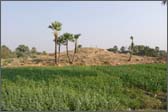 The ancient mound of th Juafar Dih having an area of about 105 x 100 mts. with the height of 10mts. is situated 3 km. west of the ruins of ancient Nalanda mahavihara.
ASI carried out an excavation at the site in 2006-07. The excavations revealed that the site have been occupied first time in Chalcolithic period and inhabited till 1st–2nd Century A.D.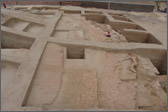
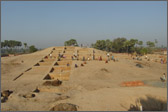
The main antiquities are terracotta hopscotches, beads, snake figurines, gamesman, dabbers, stone muller, querns, sling balls, Iron sickles, sword, chisel, hoe, axe, copper antimony rods, bone points, semiprecious stone beads etc.
The KP Jayaswal Research Institute, during in the course of its Archaeological Explorations brought to light the site period NBPW phase
Muzaffarpur
The KP Jayaswal Research Institute, during in the course of its Archaeological Explorations brought to light the site period Early medieval
Kul
The KP Jayaswal Research Institute, during in the course of its Archaeological Explorations brought to light the site period Early medieval
Bazitpur
The KP Jayaswal Research Institute, during in the course of its Archaeological Explorations brought to light the site period Early medieval
Fatehpur
The KP Jayaswal Research Institute, during in the course of its Archaeological Explorations brought to light the site period Early medieval
Karah dih
The KP Jayaswal Research Institute, during in the course of its Archaeological Explorations brought to light the site period Early medieval
Mahuri
The KP Jayaswal Research Institute, during in the course of its Archaeological Explorations brought to light the site period Early medieval
Pachwara
The KP Jayaswal Research Institute, during in the course of its Archaeological Explorations brought to light the site period Early medieval
Bhagwanpur
The KP Jayaswal Research Institute, during in the course of its Archaeological Explorations brought to light the site period Early medieval
Maniyawan
The KP Jayaswal Research Institute, during in the course of its Archaeological Explorations brought to light the site period Early medieval
Barakar
The KP Jayaswal Research Institute, during in the course of its Archaeological Explorations brought to light the site period Early medieval
Balaur
The KP Jayaswal Research Institute, during in the course of its Archaeological Explorations brought to light the site period Early medieval
Mohanpur
The KP Jayaswal Research Institute, during in the course of its Archaeological Explorations brought to light the site period Early medieval
Gorawan
The KP Jayaswal Research Institute, during in the course of its Archaeological Explorations brought to light the site period Early medieval
Surungpur
The KP Jayaswal Research Institute, during in the course of its Archaeological Explorations brought to light the site period Early medieval
Gundhupur
The KP Jayaswal Research Institute, during in the course of its Archaeological Explorations brought to light the site period Early medieval